The question keeps coming up. Sometimes directly, sometimes in a roundabout way, but it's always there: "Do we really need a custom software solution? Or isn't there already something we can just buy?" Our honest answer: Sometimes standard software is enough. Sometimes it's not. And the difference is often not as obvious as you might think. After years in software development, we have a clear picture of when each approach is the right one. We're sharing it here.
What standard software means for companies
When we speak of standard software, we mean products developed for a broad audience, and that is precisely their strength and their weakness.
Standard software is designed to cover as many use cases as possible. That means: many features, many configuration options, many integrations. For companies whose business processes align well with these standard cases, it's ideal.
Standard software is worthwhile when:
Your processes are largely industry-standard and you don't have unusual requirements
You want to get started quickly and don't have time for a longer development phase
Your budget for software development is limited
The solution serves a clearly defined, bounded purpose, for example accounting, email marketing, or HR administration
You're willing to adapt your business processes to the software, rather than the other way around
When standard software reaches its limits for companies
The problem doesn't start at the beginning, but when the company grows, business processes become more complex and automation becomes necessary.
Then what we hear in almost every initial meeting happens:
"We have System A for order planning, System B for time tracking, and System C for billing. And someone types the data in manually in between."
This is not an isolated case. This is the reality in a large part of the German Mittelstand.
Standard software is generally not built to communicate seamlessly with other systems, at least not without significant effort. And if it does, then via interfaces that are either expensive to license or fragile in implementation.
Custom software is worth it when:
You have multiple systems that don't communicate with each other and manual data transfer and duplicate entry are part of everyday life
Your processes are so specific that standard software only covers them 70% and the remaining 30% are handled via workarounds, Excel spreadsheets, or additional tools
You have recurring manual tasks and workflows that could be automated if the software allowed it
That software is a real competitive advantage and differentiator for your business model, something you can't buy off the shelf
You want to scale long-term and know that standard solutions will no longer scale and grow with you
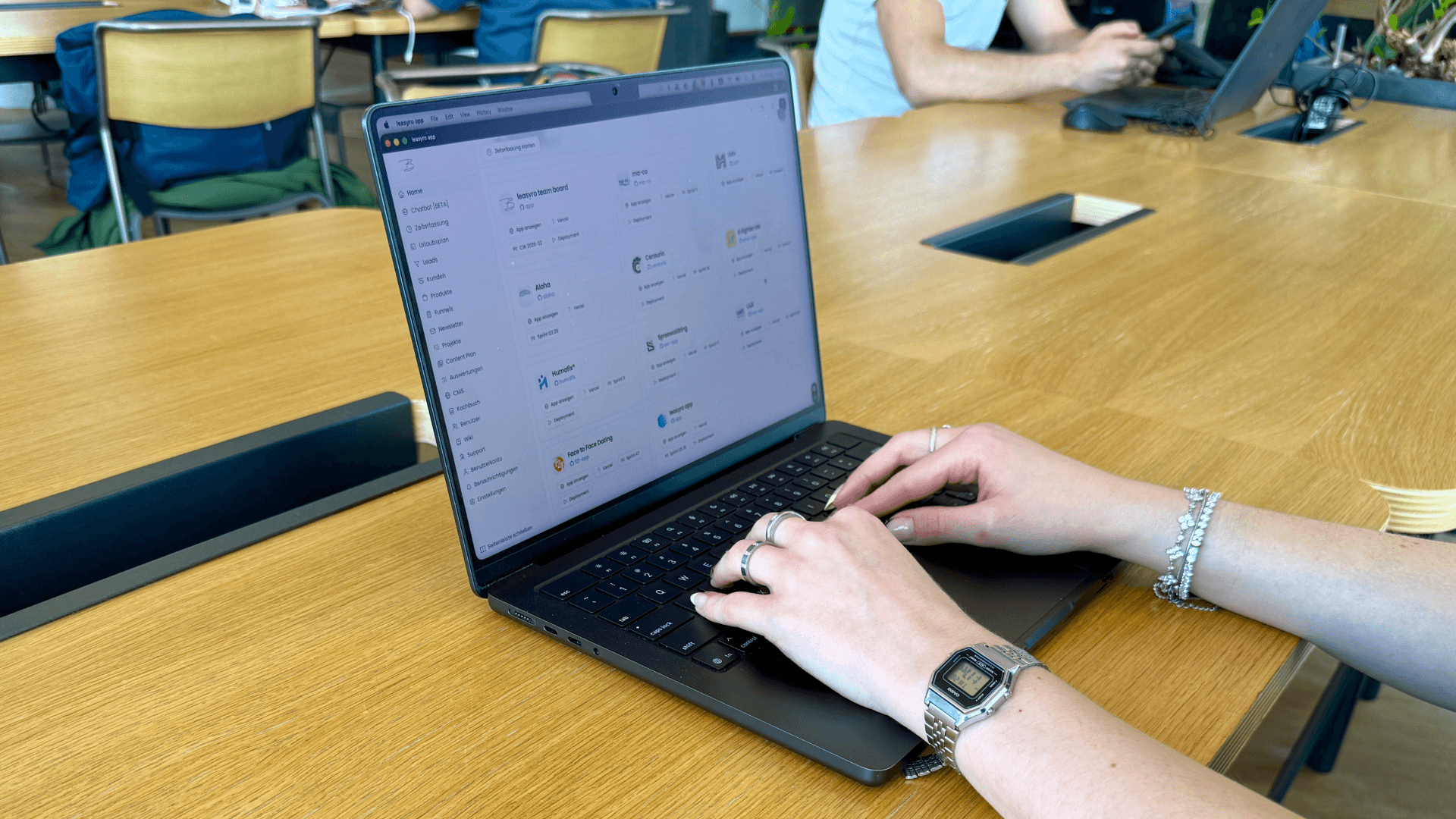

Standard or custom: The crucial question for your company
Many companies ask the wrong question. It's not "Standard or custom?" that's decisive, but: Where am I losing time, money, or quality right now due to inefficient processes because my software doesn't fit my business processes?
If the answer is: "Everywhere, but somehow we manage anyway" — then that's the moment when a custom solution begins to pay off.
What we do differently at Ben Böhm
We believe the biggest mistake in digitization projects in mid-sized companies is not choosing the wrong software, but skipping the process analysis. If you don't know how you're working today, you can't know what you'll need tomorrow.
That's why we always start every process analysis with the questions: Where do your processes stand right now? What does your current situation really cost you — in time, in errors, in effort?
The answer usually makes it very clear which path is right and what — and how — can be digitized and automated.
Conclusion
Standard software is not worse than custom software. It's made for different situations.
The deciding factor isn't company size, industry, or budget. It's the extent to which your processes differ from what standard solutions can cover.
Book your personal initial consultation now
Wondering whether custom software would make sense for your company? We analyze your business processes and find the right software solution for your company.
#Business process software#Develop custom software#Standard software